

This repository for Nybble is too redundent with large image files and is now obsolete. Please visit our new repository for OpenCat that works for both Nybble and Bittle! For the latest OpenCat robots (Bittle X, Nybble Q), see OpenCatESP32, or buy Bittle X on Petoi.com.
--
This is the repository for OpenCat project.
The goal is to collaborate talents for this cute quadruped mini robot kit. It's still a complex system only for skilled makers, yet we want to share it with the public by mass production and bringing down the cost.
OpenCat robots are used for hands-on physical AI education and real-world physical AI applications — from K-12 robotics classrooms to university research labs — not just screen-based coding exercises.

Quaddle is Petoi's newest quadruped, going live on Kickstarter Sept 2, 2026 — a mini desk robot built on the same OpenCat lineage as Bittle and Nybble.
- Full quadruped running on just 4 servos instead of the usual 8–12, which forces genuinely different gait-design and leg-coordination solutions to still get all four legs walking, running, and balancing
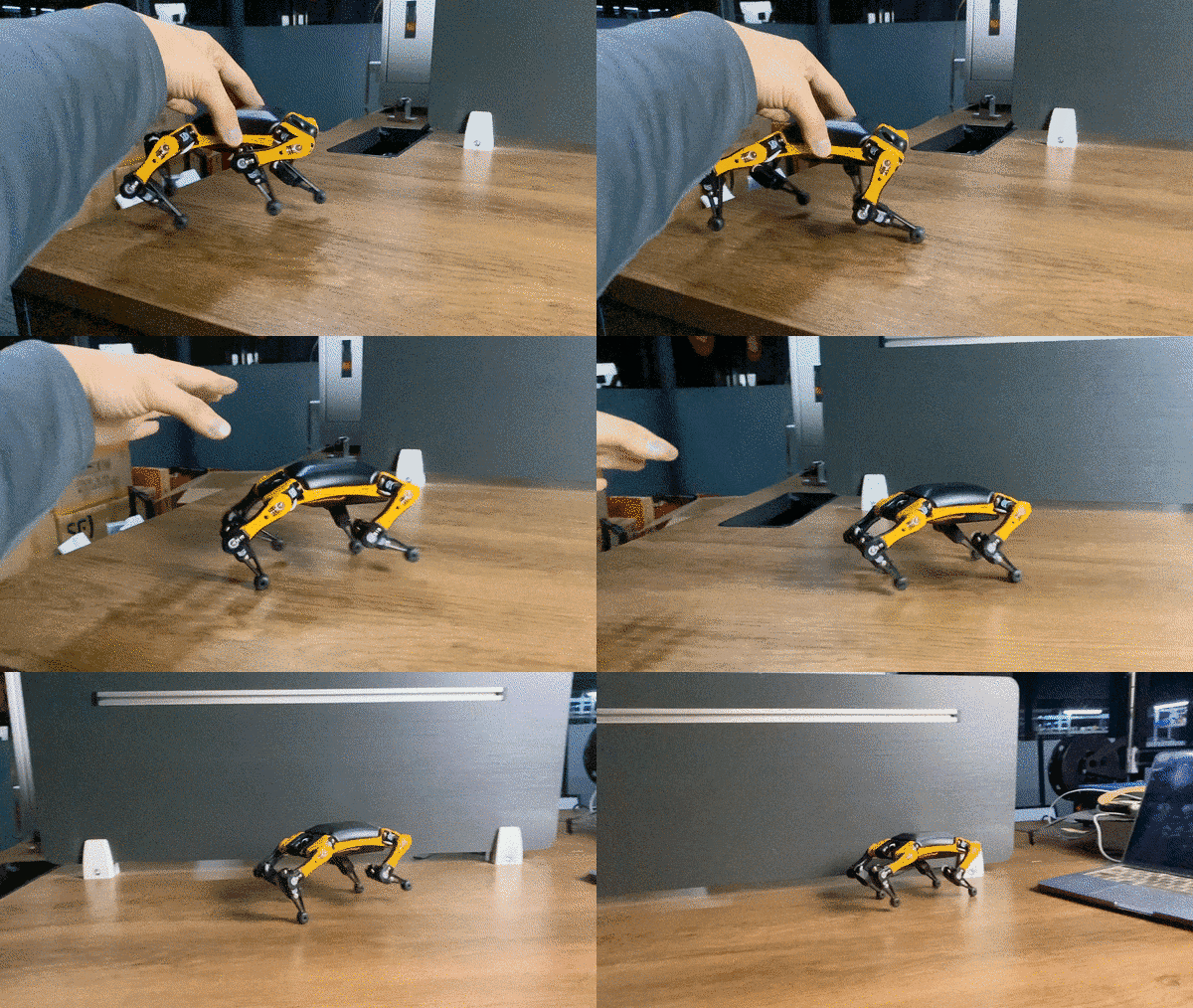
- Position-feedback servos — readable, not just drivable — which is what makes Puppet Mode possible: hand-guide the legs and record a motion directly, no code required
- 3D-printable shells and mounts for customization
- Same open platform this codebase's lineage already supports for gait research, reinforcement learning (RL), and sim2real work — a hands-on physical AI platform, not a toy version of the idea
- Try it in the online simulator before it ships
Source code is not yet public. It's an upgraded version of the OpenCat project. Its ESP32-S3 code structure is closer to OpenCatESP32, which already powers thousands of Bittle X and Nybble Q robots in the field, than to this legacy repo. We plan to open source it before Quaddle delivery.
- Watch r/petoi for the open-source announcement
- Get notified on Kickstarter when it goes live
- Check out the Quaddle Hugging Face page
Inspired by Boston Dynamics' Spot, Dr. Rongzhong Li started OpenCat in his dorm at Wake Forest University in 2016. The goal was straightforward: make agile quadruped robots affordable and hackable enough for researchers, educators, and makers — not just well-funded labs.
Since then:
- 30,000+ robots shipped, cumulative across all channels
- 60+ countries
- $1M+ raised across two prior Kickstarter and Indiegogo campaigns
- 20+ academic papers cite the platform — see Research Spotlight
- One of the most-starred open-source quadruped robot projects on GitHub
Follow the project:


