

 Figure 1: Example Results Visualization. More examples can be found here.
- Features
- For an education purpose
- From-scratch pose-graph optimization implementation
- This tried to maximize the code-level transparency of the process of generating the H and b matrices, building a linear system, and controlling the LM iterations.
- A single file
- Miminum dependencies: numpy/scipy/symforce/sksparse (and open3d for visualization).
- numpy for basic matrix handling
- scipy for basic rotation functions and sparse matrix containers
- symforce for the auto-generated symbolic Jacobian (optional)
- sksparse for cholmod and solve function
- open3d for large-sized point cloud (pose-graph) visualization
- I hope this hands-on tutorial code can also be used as training material for Symforce's auto-generated optimized Jacobian code generation (codegen).
- For the details, see below Symforce-based Auto-generated Jacobians.
- ps. This tutorial supports only batch pose-graph optimization (but with a sparse solver!) and does not cover incrementally expanding pose-graph optimization (e.g., iSAM).
 Figure 2: The pipeline of nano-pgo
- You can enjoy nano-pgo via colab!
- Recommend to use python<3.12 and numpy<2, for example,
$ python3.11 -m venv ~/envs/py311$ source ~/envs/py311/bin/activate$ pip install "numpy<2.0"$ pip install scipy$ sudo apt-get install libsuitesparse-dev$ pip install scikit-sparse$ pip install symforce$ pip install matplotlib$ pip install open3d
$ python nano_pgo.py- It's also recommended to compare the results from GTSAM (better and faster!) by using
baseline_gtsam.py.
- It's also recommended to compare the results from GTSAM (better and faster!) by using
- Note that the nano_pgo.py's goal is a maximized transparency of all logics and theories from state representations to building and solving linear systems.
- Demo video can be found here.
- Understand
- what is pose-graph optimization.
- what is a g2o-format pose-graph data.
- what is se(3) and SE(3) (the tangent space and the manifold).
- what is iterative least-square optimization and solving normal equation.
- what is the error and jacobians of between factors and how to be derived.
- what is the gauge freedom of pose-graph SLAM.
- why sparse solver is necessary (here, we used sksparse.cholmod).
- why damping is necessary (i.e., LM iterative optimization method).
- why robust loss is necessary (here, we used Cauchy deweighting).
- what are the differences between numerical and symbolic diffs.
- how to use symforce APIs.
- how to use GTSAM APIs.
- why rotation initialization is important
- what is the real-world problems, use-cases, and state-of-the arts.
-
SymForce eliminates the need for tedious and error-prone manual Jacobian derivations.
-
You can enjoy this feature by setting
self.use_symforce_generated_jacobian=Trueanddebug_compare_jacobians=True.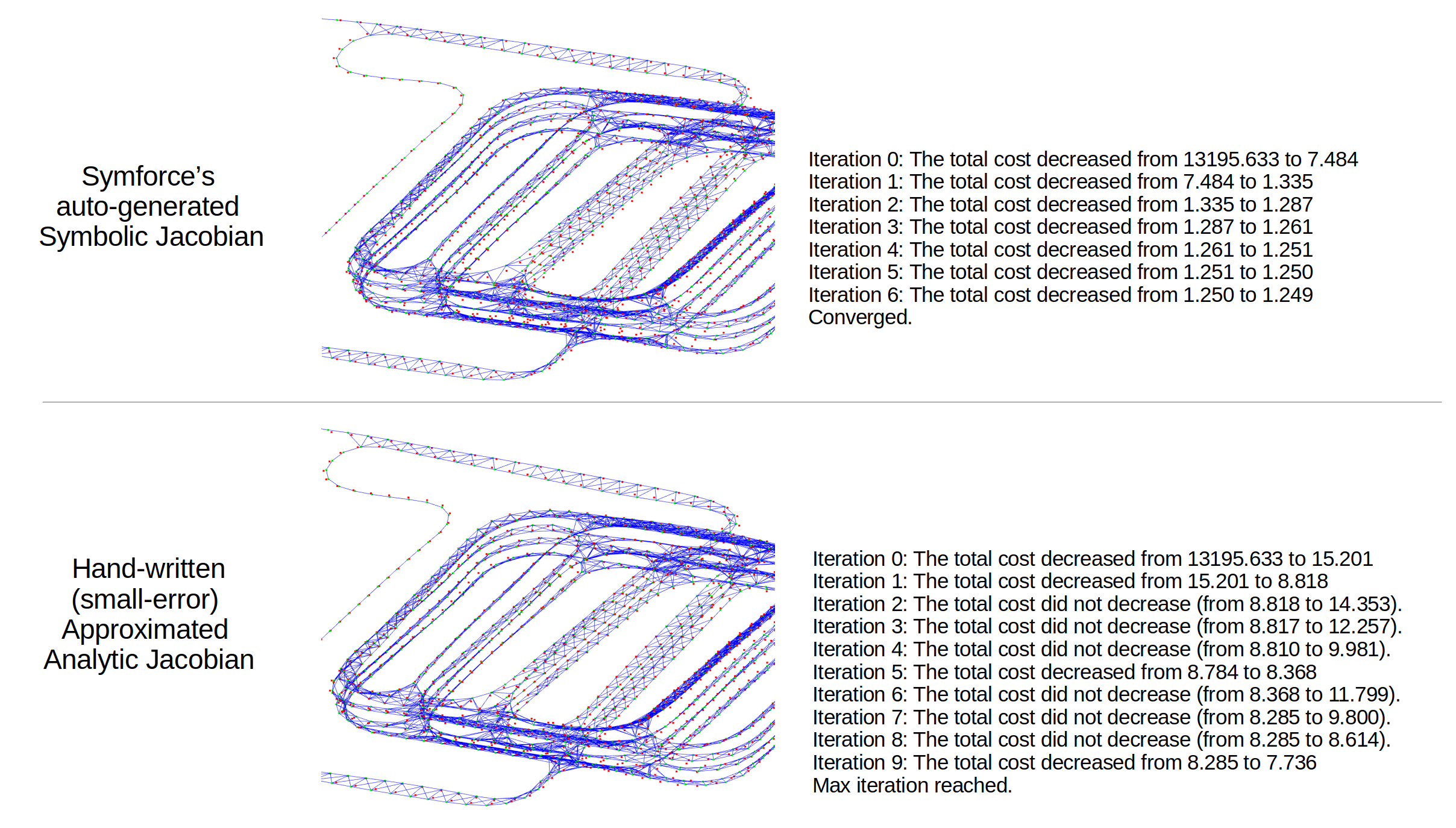 Figure 3: Auto-generated Symbolic Jacobian's effectiveness.
 -
You can first automatically generate the (symbolic) Jacobian of the relative SE(3) error like this,
import symforce.symbolic as sf
from symforce.ops import LieGroupOps

# Define rotation variables (rotation vectors for each axis)
sf_ri = sf.V3.symbolic("ri")  # Rotation of pose_i
sf_rj = sf.V3.symbolic("rj")  # Rotation of pose_j
sf_rij = sf.V3.symbolic("rij")  # Measured relative rotation

# Define translation variables
sf_ti = sf.V3.symbolic("ti")  # Translation of pose_i
sf_tj = sf.V3.symbolic("tj")  # Translation of pose_j
sf_tij = sf.V3.symbolic("tij")  # Measured relative translation

# Create rotation matrices using Lie Group operations
sf_Ri = LieGroupOps.from_tangent(sf.Rot3, sf_ri)
sf_Rj = LieGroupOps.from_tangent(sf.Rot3, sf_rj)
sf_Rij = LieGroupOps.from_tangent(sf.Rot3, sf_rij)

# Construct SE(3) containers
sf_Ti = sf.Pose3(R=sf_Ri, t=sf_ti)
sf_Tj = sf.Pose3(R=sf_Rj, t=sf_tj)
sf_Tij = sf.Pose3(R=sf_Rij, t=sf_tij)

# SE3 error: T_err = T_ij^{-1} * T_i^{-1} * T_j
sf_T_err = sf_Tij.inverse() * (sf_Ti.inverse() * sf_Tj)

# Convert SE3 error to a tangent vector [r, t], 6-dim.
#  NOTE: symforce uses the [r, t] order, not [t, r].
sf_se3_err = sf.Matrix(sf_T_err.to_tangent())

# Define residual as the rotation and translation error
sf_residual = sf_se3_err  # 6D vector

# Compute the full Jacobian
sf_J_ti = sf_residual.jacobian([sf_ti])  # 6 x 3
sf_J_ri = sf_residual.jacobian([sf_ri])  # 6 x 3
sf_J_tj = sf_residual.jacobian([sf_tj])  # 6 x 3
sf_J_rj = sf_residual.jacobian([sf_rj])  # 6 x 3
-
Then, next step is to inject (evaluate) the actual values to the symbolic (block of) Jacobian functions, like
def between_factor_jacobian_by_symforce(pose_i, pose_j, pose_ij_meas):
    """
    Computes the Jacobians for the between factor residual using Symforce symbolic computation.

    Parameters:
        pose_i (dict): Dictionary containing rotation vector 'r' and translation 't' for pose i.
        pose_j (dict): Dictionary containing rotation vector 'r' and translation 't' for pose j.
        pose_ij_meas (dict): Dictionary containing the measured relative rotation matrix 'R' and translation vector 't'.

    Returns:
        Ji (np.ndarray): 6x6 Jacobian matrix with respect to pose i.
        Jj (np.ndarray): 6x6 Jacobian matrix with respect to pose j.

    Note: the Ji and Jj should have shapes (6, 6) like:
                                        |  translation_variable (3-dim), rotation_variable (3-dim) |
            cost_func_translation_part  |               *                          *               |
            cost_func_rotation_part     |               *                          *               |
    """

    substitutions = {
        sf_ri: sf.V3(pose_i["r"] + epsilon),
        sf_ti: sf.V3(pose_i["t"] + epsilon),
        sf_rj: sf.V3(pose_j["r"] + epsilon),
        sf_tj: sf.V3(pose_j["t"] + epsilon),
        sf_rij: sf.V3(rotmat_to_rotvec(pose_ij_meas["R"]) + epsilon),
        sf_tij: sf.V3(pose_ij_meas["t"] + epsilon),
    }

    sf_J_ti_val = sf_J_ti.subs(substitutions).to_numpy()
    sf_J_ri_val = sf_J_ri.subs(substitutions).to_numpy()
    sf_J_tj_val = sf_J_tj.subs(substitutions).to_numpy()
    sf_J_rj_val = sf_J_rj.subs(substitutions).to_numpy()

    # ps. the reason why the index 3: mapped to :3
    # is because this example uses [t, r], but symforce uses the order of [r, t]
    sf_Ji = np.zeros((6, 6))
    sf_Ji[:3, :3] = sf_J_ti_val[3:, :]
    sf_Ji[3:, :3] = sf_J_ti_val[:3, :]
    sf_Ji[:3, 3:] = sf_J_ri_val[3:, :]
    sf_Ji[3:, 3:] = sf_J_ri_val[:3, :]

    sf_Jj = np.zeros((6, 6))
    sf_Jj[:3, :3] = sf_J_tj_val[3:, :]
    sf_Jj[3:, :3] = sf_J_tj_val[:3, :]
    sf_Jj[:3, 3:] = sf_J_rj_val[3:, :]
    sf_Jj[3:, 3:] = sf_J_rj_val[:3, :]

    return sf_Ji, sf_Jj
-
However, the above "raw" symbolic Jacobian includes many redundant computations, making it slow. Therefore, by using SymForce's codegen functionality, it is possible to perform compilation and code optimization (i.e., compile the Jacobian), resulting in more than a 30x speed improvement in raw Python (here, for a single block calculation, that is a single edge's H and b, 0.0031 sec to 0.00009 sec, at a single core of AMD Ryzen 7 8845HS CPU). An example of using the Symforce
codegenAPI is like:def generate_compiled_between_error_func(): def sf_between_error(Ti: sf.Pose3, Tj: sf.Pose3, Tij: sf.Pose3): return Tij.inverse() * (Ti.inverse() * Tj) between_error_codegen = codegen.Codegen.function( func=sf_between_error, config=codegen.PythonConfig(), ) between_error_codegen_with_jacobians = between_error_codegen.with_jacobians( which_args=["Ti", "Tj"], include_results=True, ) between_error_codegen_with_jacobians_data = ( between_error_codegen_with_jacobians.generate_function() ) import importlib.util for file_path in between_error_codegen_with_jacobians_data.generated_files: if file_path.name == "sf_between_error_with_jacobians01.py": target_file = str(file_path) break else: raise FileNotFoundError( "sf_between_error_with_jacobians01.py not found in generated files." ) spec = importlib.util.spec_from_file_location( "sf_between_error_with_jacobians01", target_file ) module = importlib.util.module_from_spec(spec) spec.loader.exec_module(module) return getattr(module, "sf_between_error_with_jacobians01") # Then, you can use the compiled function like this: sf_between_error_with_jacobians_func = generate_compiled_between_error_func() residual, res_D_Ti, res_D_Tj = sf_between_error_with_jacobians_func( ... )
- I attached the hard-copied compiled function file, see
__between_error_codegen.py.
- I attached the hard-copied compiled function file, see

- Another very important topic is rotation initialization for good convergence.
nano-pgoprovides a from-scratch implementation of rotation initialization via chordal relaxation.- The chordal relaxation-based rotation initialization process follows Sec III-B of the ICRA 2015 paper of Luca Carlone et al., "Initialization techniques for 3D SLAM: A survey on rotation estimation and its use in pose graph optimization." .
- The pipeline of Chordal relaxation-based rotation initialization
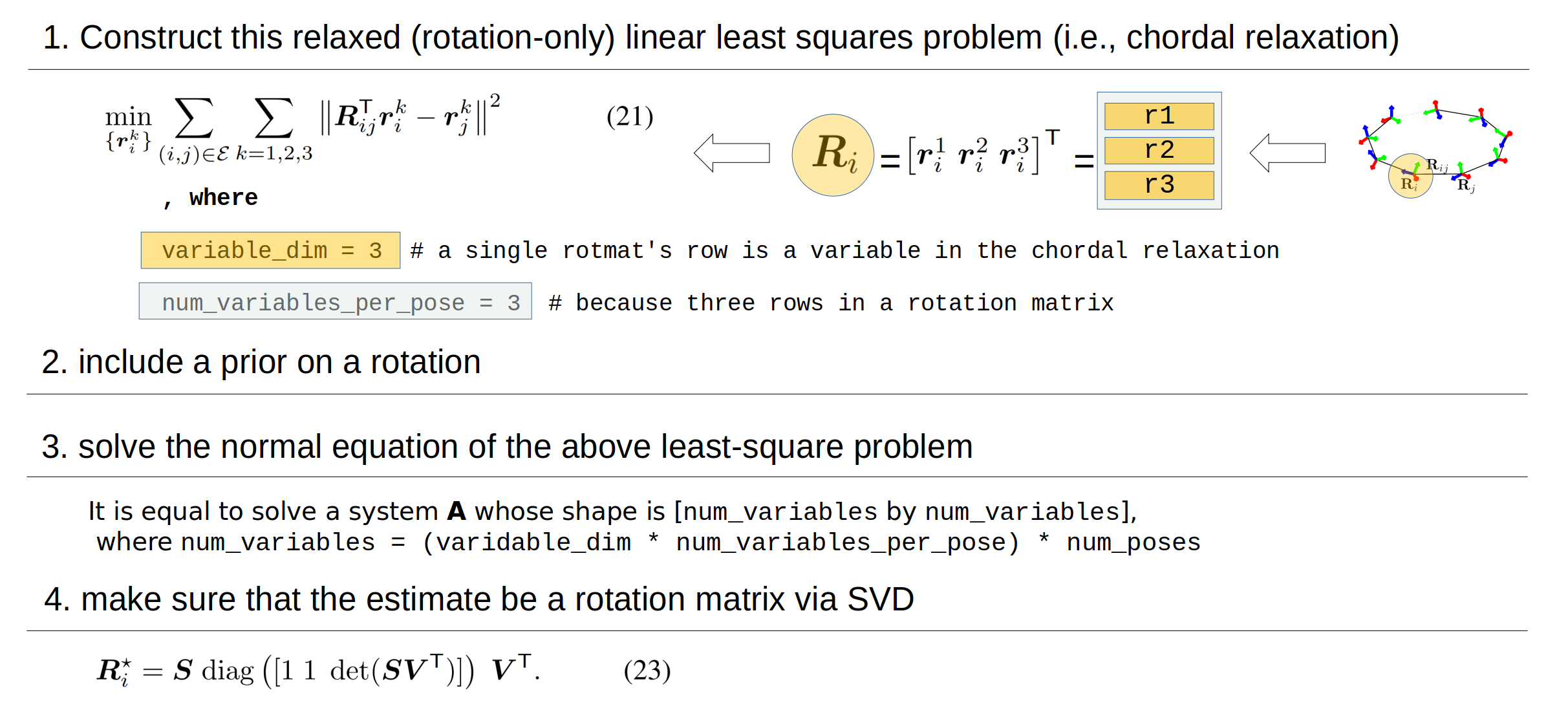 Figure 4: A summary of the rotation initialization process
 - Implementation
- See the
relax_rotationfunction for the details.
- See the
- FAQ
- What is chordal relaxation?
- To convert the optimization of nonlinear rotation variables into a linear least-squares problem.
- See the above-mentioned paper for the details
- Carlone, Luca, et al. "Initialization techniques for 3D SLAM: A survey on rotation estimation and its use in pose graph optimization." 2015 IEEE international conference on robotics and automation (ICRA). IEEE, 2015.
- Why does the chordal relaxation make theoretical sense and work?
- See the below paper's equation (1) to (6)
- Carlone, Luca, et al. "Lagrangian duality in 3D SLAM: Verification techniques and optimal solutions." 2015 IEEE/RSJ International Conference on Intelligent Robots and Systems (IROS). IEEE, 2015.
- See the below paper's equation (1) to (6)
- What is chordal relaxation?
- Selected experiments (video link).
-
The with/without rotation initialization results are almost identical for an easy dataset with good initial values.
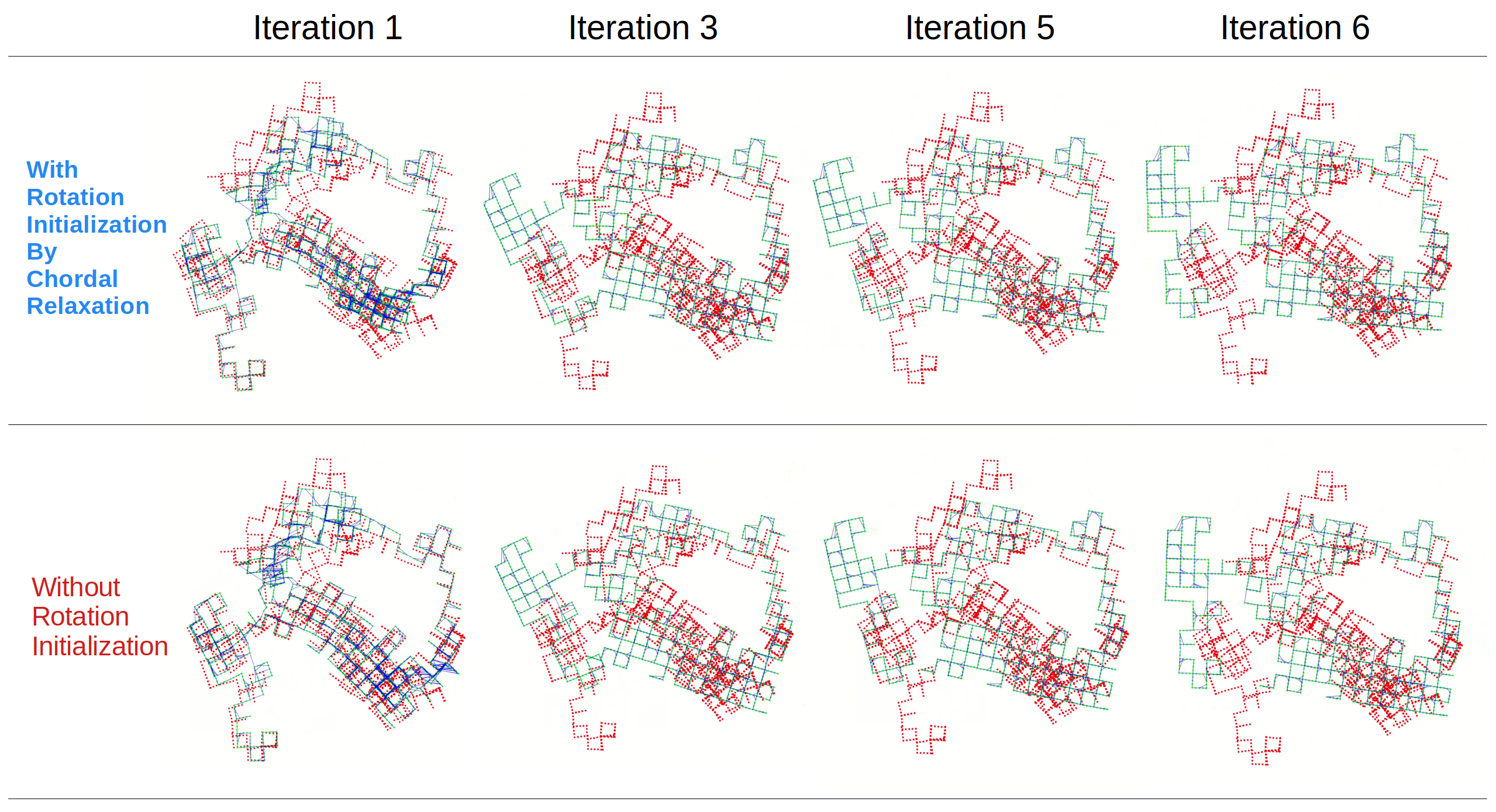 Figure 5: The experiment 1 - easy case (
data/input_M3500_g2o.g2o). -
Even with good initials, rotation initialization should always be considered a first step before the SE(3), the rotation+translation joint optimization. Because it could accelerate the convergence speed.
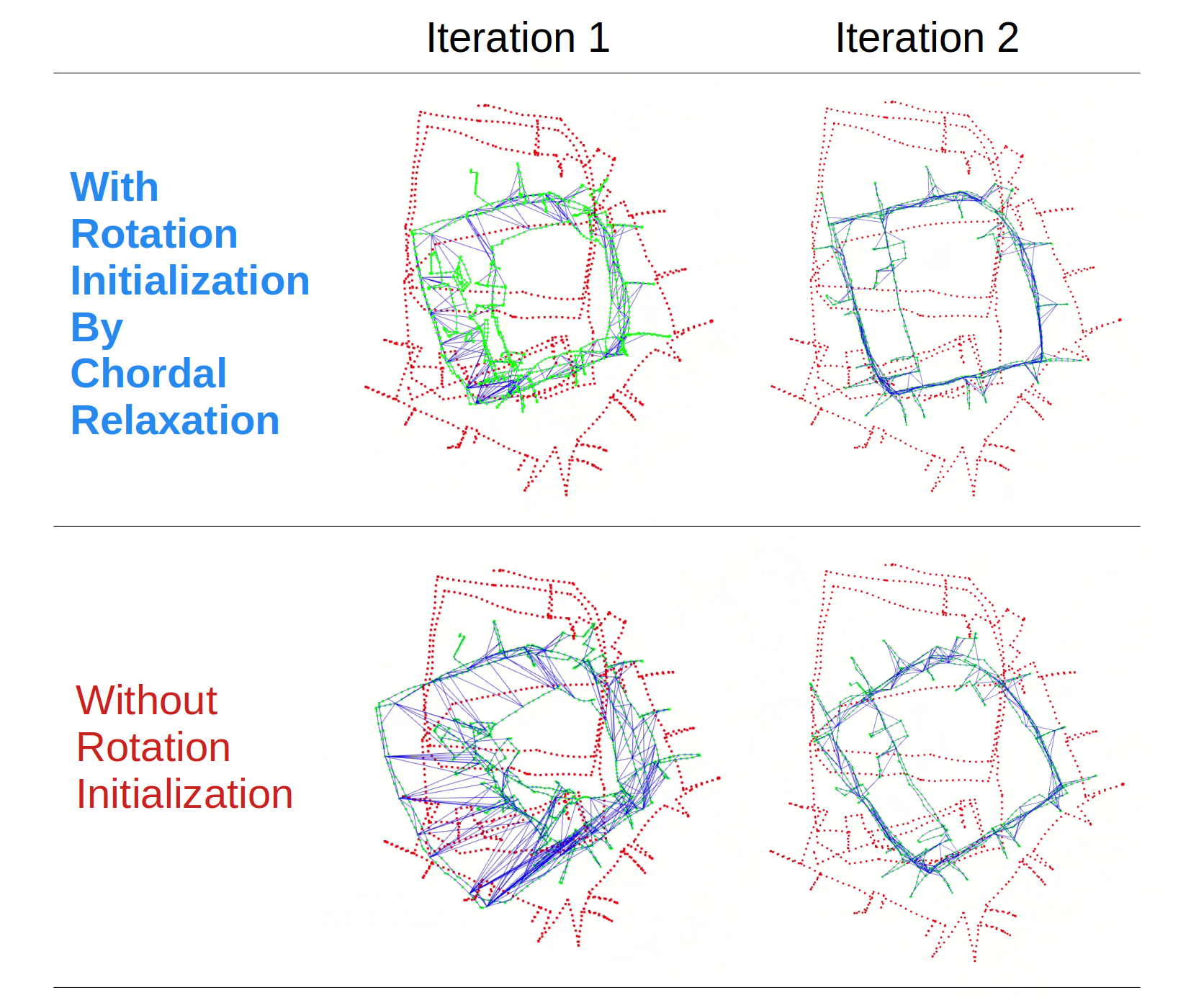
Figure 6: The experiment 2 - easy case, with fast convergence (
data/input_INTEL_g2o.g2o). -
Additionally, it is strongly recommended that the rotation initialization be used for challenging datasets where the initial values are far from the ground truth.
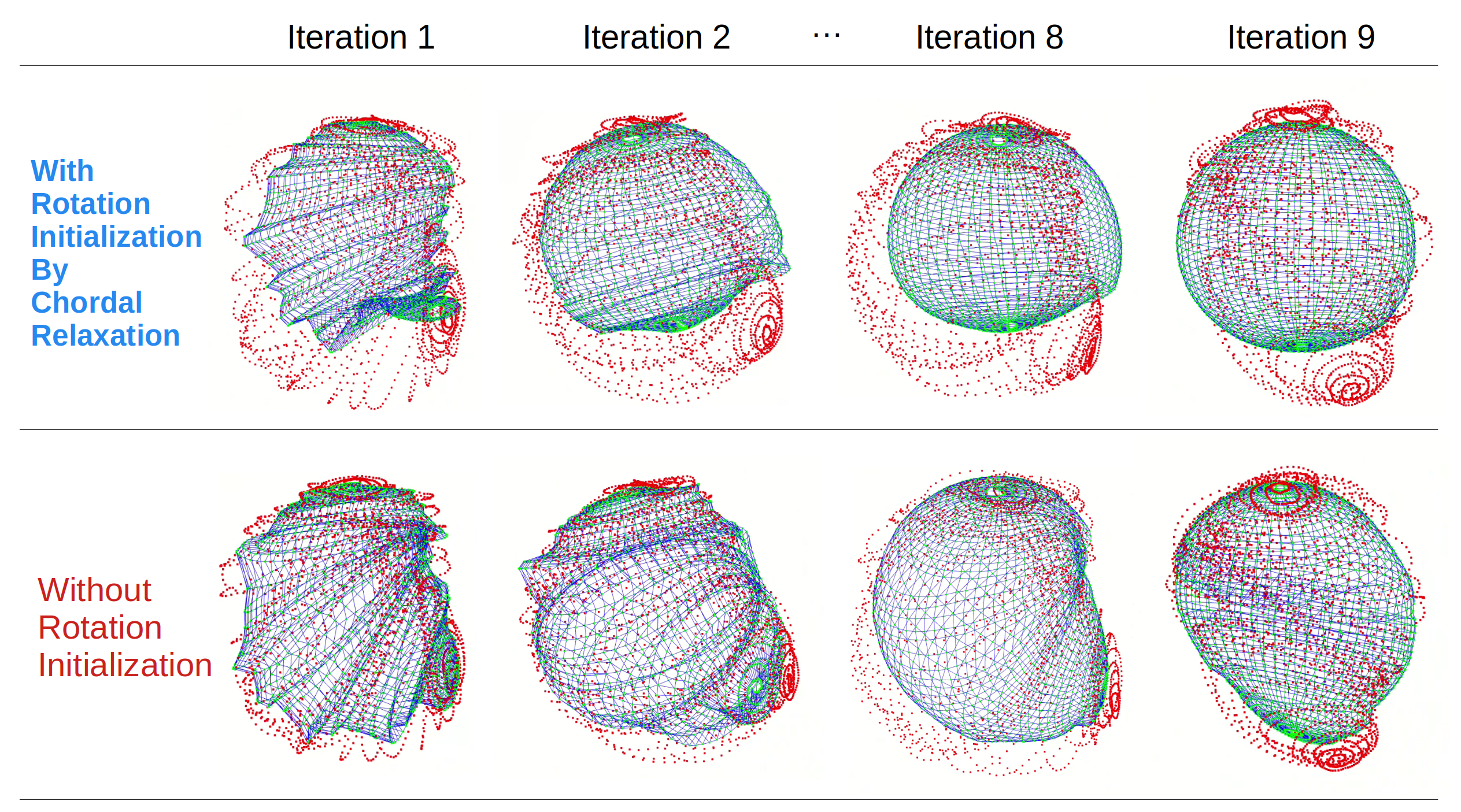 Figure 7: The effectiveness of the rotation initialization at the difficult
 sphere-adataset (data/sphere2500.g2o).
-
- Further materials
- If you are looking for an off-the-shelf library APIs, see gtsam::InitializePose3 and this example.


- Datasets from https://lucacarlone.mit.edu/datasets/